Behind the Classroom Door: A Parent’s Guide to Reading Instruction, Pre-K–5
What to Expect, What to Ask, and When to Advocate
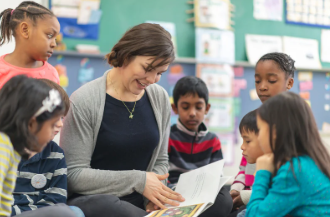
Somewhere between kindergarten and fifth grade, most children learn to read. For some it happens quickly and almost effortlessly. For others it takes longer, requires more support, and occasionally gets harder before it gets easier. Most parents have no way of knowing which experience their child is having until it’s already underway, because reading instruction is one of those things that happens behind a classroom door, in a language most families aren’t familiar with.
This article is for parents who want to understand what’s happening behind that door — what strong reading instruction looks like from kindergarten through fifth grade, what questions are worth asking at each stage, and what to do if something doesn’t seem right.
Part One: What to Expect
Reading instruction has changed significantly in recent years. Research on how children learn to read has grown stronger and more consistent, and many schools and districts are updating their approaches to reflect it. This shift is often called the Science of Reading — a term that refers to the large, converging body of research from cognitive science, neuroscience, and education that tells us how most children actually learn to read, and what kinds of instruction work best. Here is what that looks like at each stage.
Pre-K Through First Grade: Building the Foundation
Literacy development begins well before a child sets foot in a kindergarten classroom. The years before school matter enormously, and the content of this section applies to Pre-K as much as it does to kindergarten and first grade.
The early years of reading instruction are about cracking the code. English is an alphabetic language (letters represent sounds), and children need to learn that system explicitly and systematically before they can read independently.
What reading instruction often looks like in Pre-K through first grade:
• Phonological awareness: Children learn to hear and manipulate the sounds in spoken words — clapping syllables, identifying rhymes, blending and segmenting spoken words into their individual sounds. This work begins entirely in the world of listening and speaking, before a single letter is introduced. As phonological awareness develops, it bridges into phonics: children begin connecting the sounds they can already hear to the letters that represent them on the page.
• Explicit phonics instruction: Letter-sound relationships are taught directly and in a deliberate sequence, from simpler patterns (single consonants, short vowels) to more complex ones (blends, digraphs, long vowel patterns). Children are not expected to discover these patterns on their own. This is one of the most important things to understand about strong early reading instruction: the code is taught, not caught. Children who receive explicit, systematic phonics instruction learn to decode more reliably and more efficiently than those who are expected to absorb letter-sound patterns through exposure alone. That's not a criticism of any individual teacher — it's simply what the research consistently shows about how most children learn to read.
• Decodable readers: Decodable readers —books written specifically so that every word can be sounded out using the phonics patterns a child has already been taught — give children the chance to practice decoding rather than guessing from pictures or context. They look simple, and sometimes the stories feel a little stilted, but that’s by design. The goal isn’t beautiful prose. It’s practice. Practice leads to fluent reading.
• Read-aloud and oral language: While children are learning to decode, their teacher reads to them daily, books far above what they can read independently, to build vocabulary, background knowledge, and a love of stories.
Every classroom is different, and reading instruction can look different from school to school and teacher to teacher. If something your child brings home or describes about their day raises a question for you , whether it's about how phonics is being taught, what kinds of books they're reading, or why they're practicing certain skills , it's always okay to ask. A simple “Can you help me understand how reading works in your classroom?” opens a conversation that can help you feel more connected to your child's learning
Second and Third Grade: Building Fluency and Knowledge
By second grade, most children who have had strong foundational instruction are decoding most words accurately. The work of second and third grade is making that decoding automatic, so fluent that the child’s attention is freed up for meaning rather than mechanics.
What reading instruction often looks like in second and third grade:
• Continued phonics instruction: More complex patterns — longer words with more than one syllable, prefixes and suffixes, Greek and Latin roots — are introduced and practiced.
• Fluency practice: Fluency means reading accurately, at a natural pace, and with expression. It is the point where decoding becomes smooth enough that a reader’s attention is free for meaning. Children practice this by reading aloud and returning to familiar texts until the words feel automatic.
• Vocabulary instruction: Words are taught explicitly and in context, connected to ideas children are learning in science and social studies. Research consistently shows that looking up definitions and memorizing word lists produces very little lasting learning. Words stick when children encounter them repeatedly, in meaningful contexts, and have opportunities to use them in discussion and writing. If you ever wonder why your child is practicing certain vocabulary words, or how the words connect to what they're learning in class, that's a great question to bring to the teacher.
• Comprehension strategies: Children learn active reading habits: asking questions, making connections, monitoring their understanding, and rereading when something doesn’t make sense. All of these habits help children get more out of what they read on their own.
• Comprehension skills: Children also build comprehension skills, the mental tools that help readers make sense of what they’re reading. Main idea and supporting details, plot structure, cause and effect, compare and contrast: these are not just test-taking skills. They are the lenses that help readers organize information, follow a story, understand why events unfold the way they do, and remember what they’ve read.
• Knowledge building: This is the stage where what children know starts to matter as much as what they can decode. A child who knows something about the topic of a text will understand it more deeply, and a child who has been read to regularly, who has studied science and social studies with real curiosity, and who has been exposed to a wide range of topics and ideas brings all of that knowledge to every text they encounter. If you're curious about how knowledge is being built in your child's classroom — what they're studying in science and social studies, what topics the class has explored through read-alouds — those are wonderful things to ask about. The answers will give you a lot to talk about with your child.
Fourth and Fifth Grade: Reading to Learn
By fourth and fifth grade, the expectation is that students can read independently to acquire new knowledge. The texts get longer, more complex, and more specific to each subject area. A fourth grader might read a history passage, a science article, and a chapter from a novel in the same day, and each of those texts makes different demands.
What reading instruction often looks like in fourth and fifth grade:
• Content area reading: Reading instruction is woven into science and social studies, not confined to a separate ELA block. Students learn to navigate textbooks, primary sources, and informational texts, and the strategies for approaching those texts are explicitly taught. One thing worth knowing: a nonfiction passage in an ELA anthology and a chapter from a science textbook are not doing the same work. The textbook, the primary source, and the informational trade book build the kind of knowledge and reading habits that carry students into middle school and beyond.
• Vocabulary depth: Academic vocabulary — the specialized language of school subjects — is taught explicitly and revisited across contexts. By fourth and fifth grade, this vocabulary is doing serious work: words like analyze, evidence, perspective, and hypothesis appear across multiple subjects and show up on assessments. f you hear your child using words like these at home, that's a good sign the vocabulary instruction is sticking and provides you with a great conversation starter about what they're learning.
• Writing in response to reading: Students write to demonstrate understanding, make arguments, and synthesize information from multiple sources. This is harder than it sounds. It requires a child to hold information in mind, evaluate it, and express it in their own words. Strong writing instruction at this stage is connected to reading, not separate from it. A child who reads deeply about a topic has something to say about it.
• Discussion: Structured discussion of texts deepens comprehension and builds the habits of mind that complex reading requires. This doesn’t mean free conversation — it means purposeful talk where students are asked to support their thinking with evidence, respond to each other’s ideas, and wrestle with questions that don’t have obvious answers. When your child comes home with opinions about what they read, or wants to tell you about a debate their class had, that's the kind of thinking this instruction is building toward.
If a child reaches fourth or fifth grade still struggling with decoding — still sounding out words letter by letter, still avoiding reading independently — that is a signal that something in the foundational years did not fully take hold. Those gaps deserve direct attention, even as the content demands of school are increasing.
Part Two: What to Ask
Knowing what strong reading instruction looks like is useful. Knowing what to ask (and when) is what makes that knowledge actionable. Here are the questions that matter most at each stage of the year.
At the Start of the Year
The first few weeks of school are the best time to establish a relationship with your child’s teacher and set the tone for the year. You do not need a formal meeting. A quick conversation at pickup, a short email, or a few minutes at an orientation night are enough to ask:
• “What reading program does the school use, and how is it structured?”
• “How will you assess my child’s reading, and when will I hear the results?”
• “What can I do at home that will genuinely support what you’re working on in class?”
You are not auditing the teacher. You are signaling that you are a curious, engaged partner who wants to work together to ensure your child’s success.
At Conferences and Progress Reports
Parent-teacher conferences are short, and they often follow a familiar format: the teacher shares what they're observing, and there's a few minutes at the end for questions. Come with a question or two that gets you specific information:
• “Where is my child relative to grade-level expectations in reading?” You're looking for specifics: where they're excelling and what skills are still developing. The more concrete the answer, the more you'll have to work with at home and to talk about with your child.
• “What are the one or two things that would make the biggest difference for my child’s reading right now?”
• “Is there anything in how my child reads that you would want me to know about?”
That last question is worth asking even when everything seems fine. The earlier you establish that you want the full picture, the easier those conversations are if something comes up later.
When Something Seems Off
Trust what you observe. Parents see their children reading at home in ways teachers may not observe at school: avoiding books, guessing at words, getting frustrated, losing stamina quickly. If something feels off, it probably warrants a conversation, even if the teacher hasn’t raised a concern.
• “I’ve noticed my child seems to struggle with [specific thing]. Is that something you’ve seen in class?”
• “My child seems to be guessing at words rather than sounding them out. Is that consistent with what you see?”
• "How do you typically approach things when a child needs a little extra help?"
The goal of these conversations is not to alarm anyone. It is to make sure you and the teacher are seeing the same child.
Part Three: When to Advocate
Reading difficulties are more common than most parents realize. Some children need more time, more explicit instruction, or a different approach, and the earlier that’s identified, the better the outcome tends to be.
Signs That Warrant Attention
These are not diagnoses. They are signals worth taking seriously:
• In Pre-K: limited interest in books or being read to; difficulty hearing rhymes or playing with words and sounds; very little engagement with print in the environment. These aren't causes for alarm on their own. Children develop at different rates, but they're worth mentioning to the teacher if you notice them consistently.
• In kindergarten or first grade: difficulty connecting letters to sounds; guessing at words using pictures rather than decoding; avoiding reading tasks.
• In second or third grade: reading significantly below grade level; still sounding out simple words; strong comprehension when read to but poor comprehension when reading independently.
• In fourth or fifth grade: avoiding reading entirely; unable to read grade-level texts with accuracy; fatigue or frustration after short reading tasks.
These patterns don't always mean a child has a reading disability. Sometimes a child missed foundational skills along the way, or needs more time and a different approach to address. Either way, they are always worth a conversation.
What You Can Do
If you have concerns, the classroom teacher is always a good first conversation. Be specific about what you're observing at home — how your child talks about reading, what you notice when they read aloud, whether they're avoiding books. The more concrete you can be, the more useful the conversation will be for everyone.
Some questions that can help move things forward:
• "Can you share what your reading assessments are showing for my child?"
• "What does additional support look like in your classroom, and is that something my child is receiving?"
• "What would next steps look like if we both felt my child needed more help?"
If those conversations raise more questions, or if you feel your child needs a more formal evaluation, parents have important rights under federal law that were covered in detail in the reading evaluation article earlier in this series.
A Brief Word on Dyslexia and Reading Disabilities
Dyslexia is a learning disability that affects an estimated 1 in 5 people. It is neurological in origin and is not a reflection of intelligence, effort, or parenting. Children with dyslexia can learn to read, but they typically benefit from more explicit, more intensive, and more systematic instruction.
If you suspect your child may have dyslexia or another reading-related disability, the International Dyslexia Association (dyslexiaida.org) and Understood (understood.org) are both excellent resources for families navigating the evaluation and support process. They go far deeper than this article can.
One Last Thing
Reading is the skill that makes everything else possible. A child who is struggling to read is not a child who is failing — but a child who needs something the instruction hasn't yet fully addressed.
Every parent wants their child to succeed, in school and beyond. When it comes to reading instruction, asking questions, staying informed, and trusting what you observe at home are some of the most meaningful things you can do. This article's goal was to inform you and empower you to be an advocate for your child.
Your Turn
For parents
What has surprised you most about reading instruction since your child started school? And is there a question you wish you had asked earlier, one you only knew to ask after something came up?
For teachers
What do you wish more parents understood about how reading is taught? And what’s the question you most wish families would ask?
Subscribe so you don’t miss a single article!
