The Talking Comes First: How Everyday Conversation Builds the Foundation for Reading
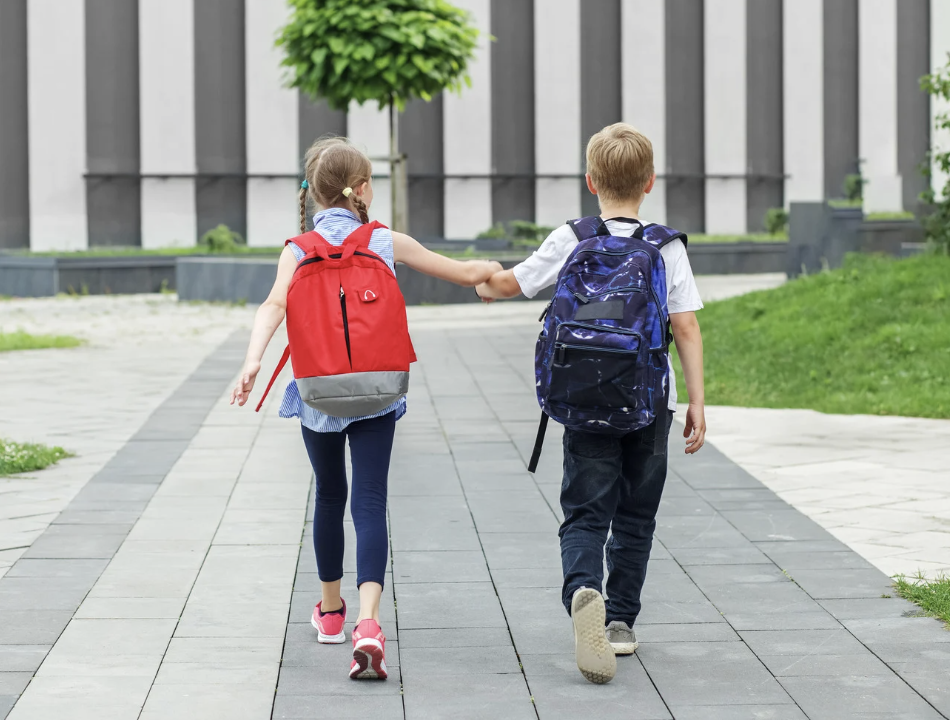
Two children arrive at kindergarten on the first day of school. Same age, same school, same classroom. From the outside, they look similar. But over the past five years, their language environments have been remarkably different.
One has had thousands of hours of back-and-forth conversation — questions answered, stories told, words explained, ideas explored at the dinner table, in the car, and at the grocery store. The other has had fewer of those exchanges — not because anyone failed them, but because life is busy, resources are stretched, and no one told them how much those conversations matter.
The difference will not show up clearly today. It will start to show up in second grade, when texts begin to carry more complex ideas. By fourth grade, it may look like a comprehension problem — a child who can decode every word on the page but cannot make sense of what it says.
What it actually is, in most cases, is an oral language gap. And the place to close it is not a classroom worksheet. It is a conversation.
Reading Depends on Something That Comes Before Reading
If you have been following this series, you know that reading is not natural — the brain has to be rewired to do it. But there is something the brain does develop naturally, something it is designed for from the very first months of life: language. Spoken language. The ability to understand and produce words, sentences, ideas.
That language ability is the foundation that reading comprehension is built on. A child cannot understand written language they could not understand if they heard it spoken aloud.
This is the insight at the heart of the Simple View of Reading, a framework introduced by Gough and Tunmer in 1986 and now supported by decades of research. You may remember it from the comprehension article in this series:
Decoding × Language Comprehension = Reading Comprehension.
Language comprehension — the ability to understand connected, complex language — is what makes those words mean something. Decoding is the engine that turns print into words. And language comprehension is built largely through talking and listening long before a child ever opens a book.
What Oral Language Actually Is
Oral language is not just vocabulary, though vocabulary is part of it. It is the whole system through which children understand and use spoken language, built on three interconnected components.
Vocabularyis knowing words — not just recognizing them, but understanding what they mean, how they connect to other words, and how to use them in context. A child who hears the word “reluctant” in a sentence and can infer its meaning from context has a vocabulary skill. A child who has never encountered the word at all has nothing to infer from.
Syntax is understanding how sentences are put together — word order, grammar, how ideas connect across a sentence. A child who can follow a sentence like “Although the dog was hungry, he waited patiently” understands how that sentence works. This matters for reading because complex written sentences follow grammatical structures that children rarely encounter in casual conversation.
Listening comprehension is the ability to follow and understand connected language — a story, an explanation, an argument — not just individual words or sentences. A child who can listen to a paragraph being read aloud and summarize what it meant has listening comprehension. A child who hears the words but cannot hold the thread does not.
Foorman and colleagues (2015), studying children in kindergarten through second grade, found that oral language — measured across vocabulary, syntax, and listening comprehension — directly and independently predicted reading comprehension in the early grades. These three components feed each other and together determine how much of what a child reads they will actually understand.
The Research on This Is Clear — and Striking
A five-year longitudinal study by Lervåg and colleagues (2018), following children from age 7.5, found that listening comprehension and decoding together explained nearly all of the variation in reading comprehension. The oral language side of that equation — vocabulary, syntax, listening comprehension — predicted not just early reading comprehension but its growth over time. Foorman and colleagues (2015) found the same pattern in younger children: oral language and decoding skills each independently predicted how well children in kindergarten through second grade understood what they read.
The practical implication: a child who is strong in phonics but weak in oral language will hit a ceiling. And they will hit it around the time texts become more demanding (usually in the middle elementary grades).
This is the pattern educators and researchers sometimes call the fourth-grade slump — a point where children who decoded well in the early grades begin to struggle as texts become more demanding. It reflects a fundamental shift in what reading requires: in the early grades, children are learning to read. By third and fourth grade, they are expected to read to learn. That shift puts oral language at the center. Children who decoded well but never built a strong language foundation find that the tools that carried them through second grade are no longer enough. Oral language is consistently identified as one of the key factors in whether children navigate that shift successfully.
How Oral Language Develops — and What Actually Builds It
Oral language does not develop through instruction. It develops through conversation.
Not through worksheets, not through vocabulary lists, not through apps. Through back-and-forth talk — the kind where a child says something and an adult responds, asks a question, adds an idea, extends the thinking.
Research by Romeo and colleagues (2018) at Harvard and MIT found that the number of back-and-forth conversational turns between adult and child was a stronger predictor of children’s language skills — and activity in the parts of the brain responsible for language — than the total number of words children heard. Children who are talked with, not just talked at, develop stronger language. The finding held across socioeconomic backgrounds — meaning this is not only a resource issue. It is a practice issue. Every family and every classroom has access to conversation.
Researchers Sonia Cabell and Tricia Zucker describe this as the “Strive for Five” framework — the goal of extending a conversation to five or more back-and-forth turns between adult and child. Their research found that most classroom conversations stop at three turns, cutting short the very exchanges that build language comprehension. The dinner table, the car ride, the bath, the grocery store — these are not interruptions in the day. They are the work.
What Parents Can Do at Home
1. Ask questions that go somewhere
Skip yes/no questions. “What did you think about that?” goes further than “Did you like it?” “What would you have done?” opens a conversation. “Did you understand?” closes one.
2. Use sophisticated words naturally
When something is surprising, call it “unexpected.” When your child is frustrated, offer “exasperated” or “discouraged” alongside it. Children absorb words they hear repeatedly in meaningful contexts. That is vocabulary building — no flashcards required.
3. Let them explain things to you
When a child explains a game, a show, or something that happened at school, they are practicing the connected, organized language that reading comprehension requires. Ask follow-up questions. Let them keep going.
4. Think out loud
When you are cooking, driving, or shopping, narrate what you are doing and why. It is not forced — it is modeling the kind of organized, connected language children need to hear.
What Teachers Can Do in the Classroom
1. Build discussion into every lesson
Not just answering questions — structured conversation. Anytime children have to put their understanding into words and respond to what someone else says, oral language is developing.
2. Talk about what you read aloud
The discussion around a read aloud is as important as the reading itself. Pause to explore a word, ask what someone thinks will happen next, discuss why a character made a choice. That discussion is oral language instruction.
3. Strive for Five
Most classroom conversations stop at three turns. Push for five. Ask a follow-up. Invite another student to respond. The extra turns are where language grows.
4. Prioritize children who need it most
Children who arrive with weaker oral language need more talk, not less. Small-group discussion, deliberate vocabulary instruction, and language-rich routines make the biggest difference for the children who have had the fewest conversations.
The Bottom Line
Oral language is the half of reading that happens before reading begins. Every conversation a child has, every story they hear, every word they encounter in meaningful context is building the language foundation that comprehension will eventually stand on.
Decoding gets children to the words on the page. Oral language is what makes those words mean something. Neither is enough without the other.
The dinner table conversation, the question in the car, the story at bedtime, the patient explanation of why the sky is blue — none of these feel like reading instruction. But they are building the very thing that reading depends on.
Talk to your children. Talk with them. It is the most important thing you can do.
Your Turn
Think about the adults in your childhood who talked with you — not just to you. What do you remember about those conversations? Did they shape how you think or read today?
If you are a parent: how much back-and-forth conversation happens in your home on a typical day? Not lectures or instructions — real exchanges where your child gets to share their ideas and you respond to them?
If you are a teacher: what has been your experience with students who arrive with weak oral language? What classroom practices have made the biggest difference?
Subscribe so you get every article!
