Midweek Mini: Pre-K Kids and Screens: When “Reading” Means Swiping
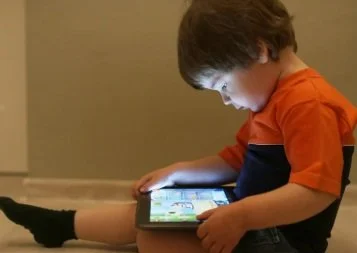
I recently read an Education Week article that stopped me in my tracks. It reported that about one-third of children entering preschool in 2025 didn’t know how to handle a book properly, some tried to swipe at the pages, the same motion they’d use on a phone or tablet. American teachers are reporting the same pattern. One early educator told EdWeek’s research team: “This year, my students are not able to attend to books. When asked, the parents say that their child does not enjoy books, so they do not read to them regularly.”
The article also pointed to a few other findings worth sitting with. Nearly half of children under 8 have already watched short-form video content like TikTok or YouTube Shorts. And the habit of parents reading aloud to young children still hasn’t fully recovered since the pandemic. Taken together, the picture is pretty clear: books are losing ground to screens earlier and earlier, and it is starting to show up in how young children physically interact with print.
If you read the print concepts article earlier in this series, you already know why that swiping detail jumped out at me. Before a child can learn to read, they need to understand how books actually work: which end is the front, that print moves left to right, that the squiggles on the page, not the pictures, are what carry the story. That cluster of understandings is called print awareness, and it has always developed the same way, through hands-on, repeated exposure to real books. A swiping motion teaches something different. It teaches a child that pages respond to a flick of the finger, not that pages turn one at a time, front to back, in a fixed sequence.
This connects to the oral language article too: back-and-forth conversation is one of the most important things you can do for a young child’s language development — the pointing, the questions, the pauses, the responses. That exchange is harder to replicate with a screen, even a good one, which is part of why read-alouds matter as much for language as they do for print awareness.
None of this requires a dramatic overhaul. It requires a few small, consistent habits.
A Few Ways to Build Print Awareness Back In Throughout the Day
• First thing in the morning or at bedtime: Keep one or two real books within easy reach, on a low shelf, by the bed, so picking one up requires zero extra effort
• During read-aloud time: Let your child turn the pages themselves, and occasionally run your finger under the words as you read. Both motions, turning pages and tracking print, are part of what builds print awareness, in a way swiping never will
• In the car or at a restaurant: Reach for a board book instead of a device during the in-between moments. These are exactly the moments screens tend to fill by default
• At the library or bookstore: Let your child pick the book. Ownership over the choice tends to build more enthusiasm than a book chosen for them
• Anytime print appears: Point to it and say what it says, a cereal box, a street sign, a menu. This builds the understanding that print carries meaning, with no extra time required
If screens are already part of your routine, that’s not a reason for guilt. It’s a reason to be intentional about making sure print still gets equal time.
Subscribe so you don’t miss Sunday’s article.
