How to Build a Reading Life — Not Just Reading Skills
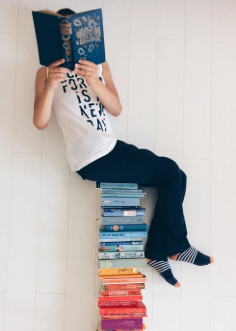
I have been a reader for as long as I can remember. It is not something I do. It is something I am. I have the mug. I have the tote bag. I have the home filled with books I will probably never have time to read, and I love every one of them anyway. Reading has brought me more joy than almost anything else in my life, which is perhaps why I ended up getting a master’s degree in library science. Not for a promotion. Not because it was practical. But because I loved books and libraries so much that I wanted to spend my life sharing that love with other people: by helping children learn to read effectively and discover the joy that reading brings.
One book I can point to that fostered my love of reading and made a lasting impact is Lois Lowry’s Number the Stars. I was in fourth grade. I read it once, then read it again, then read it a third time. It opened a door I didn’t know was there — into historical fiction, into World War II, into questions about love and hatred, what it means to be a good friend and to take risks for the right reasons. I have carried those questions with me ever since. As a fourth-grade teacher, I built entire units around that book. I even gifted it to my niece when she was old enough to tackle the content and enjoy it.
That is what a reading life looks like. Not a skill. Not a level. A relationship with books that begins in childhood and grows for the rest of a person’s life.
This article is about how that happens, and what teachers and parents can do to help it along.
Learning to Read Is Not the Same as Becoming a Reader
There is a distinction that doesn’t get made often enough in conversations about reading education: the difference between learning to read and becoming a reader.
Learning to read is about acquiring a skill. Decoding, fluency, comprehension strategies are the technical machinery that allows a person to take print off a page and make meaning from it. This is essential. It is the work of the early grades and the focus of most reading instruction. Without it, nothing else is possible.
But it is not sufficient. A child can become a perfectly competent decoder and still never pick up a book voluntarily. They can pass every reading assessment and still not consider themselves a reader. They can exit elementary school with grade-level skills and never read for pleasure again.
This is not a hypothetical. The research on reading motivation consistently finds that children’s enjoyment of reading and their sense of themselves as readers decline steadily across the elementary years, accelerating sharply in middle school. By adolescence, many students who can read choose not to. The skill is intact. The identity was never formed. Researchers have a word for what happens next: aliteracy — the condition of being able to read but choosing not to. And the trend data is sobering: according to a 2025 study published in iScience that analyzed data from over 236,000 Americans, the share of Americans who read for pleasure on an average day has fallen by more than 40 percent over the past two decades. The skill is still there. But somewhere between learning to read and adulthood, the reading life never took hold.
Reading identity — the sense of oneself as someone who reads, who belongs in the world of books, who reaches for a book every day as naturally as reaching for a cup of coffee — is built differently from reading skills. It is not taught through phonics lessons or comprehension worksheets. It grows through experience: through the right book at the right moment, through being seen as a reader by someone who matters, and through having enough choice and enough time to discover what reading can actually feel like.
How Reading Identity Forms
After years in classrooms and as an aunt who has pressed books into the hands of every child I love, I keep coming back to the same four things. They aren’t a research list. They’re what I’ve watched matter repeatedly for the children who became readers and the ones who almost didn’t.
Success opens the door
Children who believe they are good readers read more. Children who read more become better readers. The relationship is circular and self-reinforcing, but it must start somewhere. A child who struggles to decode and has never experienced the pleasure of reading fluently has little evidence that reading is for them. When a child is using all their effort simply to decode the words on the page, there is nothing left for enjoyment. This is one of the most important reasons that early, explicit reading instruction matters — not just to build skills, but to open the door to the experience of reading that makes identity possible.
The right book changes everything
Every reader can name the book that got them. The one that felt like it was written for them specifically, that made them stay up past their bedtime. For me it was Number the Stars. For your student or your child it might be Captain Underpants or The Hunger Games or a graphic novel about a magical world. The genre doesn’t matter. The author’s literary reputation doesn’t matter. What matters is that the book found them.
Being seen as a reader
Identity is partly social. A child who is called a reader, who is treated as someone with opinions about books, who is asked what they’re reading and whether it’s any good, begins to internalize that identity. An adult who reads aloud with genuine enthusiasm, who recommends books like a friend rather than prescribing them like medicine, who talks about their own reading life in front of children, is doing something more powerful than instruction. They’re modeling what it means to be a reader.
Choice makes it personal
Children who have some control over what they read are more motivated, more engaged, and more likely to identify as readers than children who only read what is assigned. This doesn’t mean abandoning curriculum or letting children opt out of difficult texts. It means building in time and space for children to read whatever they want, and taking seriously the books children choose, even when those books are not the ones we would have chosen for them.
For Teachers: Building a Reading Community Not Just a Reading Curriculum
The classroom is where reading identity is powerfully shaped, for better or for worse. A few things that make a real difference:
Visit the library
Take students to the library regularly, not just for research projects, but to browse. Let them wander the shelves, pick up books that catch their eye, and leave with something they actually want to read. That freedom to explore is part of how reading identity forms.
Keep reading aloud
Reading aloud to students in elementary school and beyond is one of the highest-leverage things a teacher can do for reading identity. It models fluent, expressive reading. It exposes students to vocabulary and ideas above their independent reading level. And it creates a shared literary experience in the classroom, a common set of characters and stories that become part of the culture. Don’t stop when they can read independently. Read to them because you love the books.
Share your reading life
Tell students what you’re reading. Tell them when a book surprised you or when you cried or when you stayed up too late to finish a chapter. Put your current book on your desk. Recommend books to individual students based on what you know about them. And when the class is reading independently, read alongside them. Let them see you lost in a book. That image (a teacher reading for pleasure) is worth more than almost anything you could say about why reading matters.
Honor what they choose to read
The student reading a graphic novel is reading. The student rereading the same Captain Underpants book for the fifth time is reading. The student working through a book well below their reading level because it’s comfortable and they’re enjoying it is reading. Reading identity is fragile in its early stages. The quickest way to damage it is to communicate, however gently and well-intentioned, that the books a child loves are not good enough.
For Parents: Building a Reading Home
The home reading environment is one of the strongest predictors of whether children become lifelong readers. Not test scores, not curriculum, not the quality of the school library. The home.
Read where they can see you
Children learn what adults do, not just what adults say. A home where the adults read — where books are on the coffee table and the nightstand, where a parent reaches for a novel at the end of the day — is a home that sends a message about what reading is for. You don’t have to make it a lesson. Just let it be visible.
Keep reading aloud
Many parents stop reading aloud when their children learn to read independently, which is understandable but a missed opportunity. A child whose parent reads to them at nine or ten or twelve is getting something different from a child who reads alone. They’re getting a shared story (a book that belongs to both of them) and a conversation that can happen over dinner about what they think is going to happen next.
Take their reading interests seriously
Ask about the books they’re reading. Not “did you finish your reading” — which treats reading as an obligation — but “what’s happening in your book right now?” or “who’s your favorite character?” or “would you recommend it?” These questions position the child as someone with literary opinions worth having. And if your child asks you to read a book with them or after them, say yes. Every time.
Give books like you mean it
Not just any book: one chosen specifically for this child, for this moment, based on what you know about who they are and what they love. A gift book that lands is a message: someone who loves me knows that I am a reader.
Make the library a habit
Make the library a regular part of your family’s routine, not just when there’s a school project due, but as a destination in its own right. Let your child roam the shelves and choose whatever calls to them. A child who grows up thinking of the library as a place that belongs to them is a child who has a reading life waiting.
What We Are Really Talking About
When we talk about building a reading life, we are talking about something larger than literacy. Books give children access to other people’s inner lives. They make us more curious, more compassionate, and more able to understand a world that is full of people unlike us.
Number the Stars taught me about the Holocaust when I was nine years old. It taught me about friendship and courage and what ordinary people are capable of when history demands something from them. No matter how old I get, I hope I am as good a friend, as brave, and as willing to do the right thing when it costs something as Annemarie. I could not have gotten that from a comprehension skills lesson. I got it from a book. I got it from a book — the right book, at the right moment, when I was ready for it.
Every child deserves that moment. Our job (as teachers, as parents, as people who love books) is to create the conditions in which it can happen.
One thing you can do today: put a book in a child’s hands that was chosen just for them. Not because it’s at their level. Not because it will help them on a test. But because you think they might love it. Then step back and see what happens.
Your Turn
What was the book that made you a reader? And is there a student or a child in your life right now who hasn’t found theirs yet?
Subscribe so you don’t miss next Sunday’s article.
