Cursive’s Comeback: What Brain Science Actually Says
Confession time! Cursive writing was incredibly difficult for me in 3rd grade. I hated it. And I wasn’t very good at it either. My teacher sent home academic alerts about my handwriting. I became a bit more interested in handwriting in middle school when I started to experiment with loops, hearts for dots over letters, and bubbly fonts.
Then I had to teach cursive writing. I think it was just about as painful for me as it was for my students. The whole time I was teaching cursive I was thinking to myself “Why? What’s the point of this?”
For a while many thought cursive was dead. It seemed that society decided that keyboards made learning cursive unnecessary.
But not so fast.
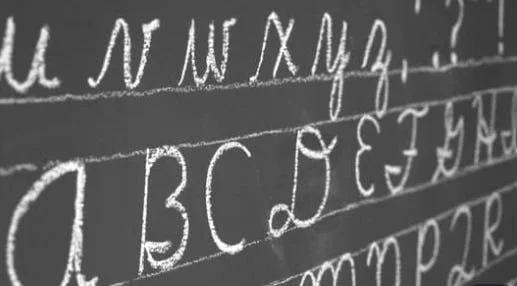
Cursive handwriting is making a comeback, and it’s not just nostalgia driving the resurgence. About two dozen states have brought it back into classrooms in the past decade. Even countries like France and Brazil never stopped teaching it.
But here’s the real story: This comeback is riding on a wave of neuroscience research showing that handwriting—particularly the flowing, connected letters of cursive—does something unique in the developing brain that typing simply cannot replicate.
Let’s explore what the science says about cursive, why it matters for reading and learning, and what this means for your child.
The Brain Science Behind Handwriting
Remember from my previous articles how there’s no “reading center” built into the brain? Reading is an invention, and the brain must be rewired to do it. Here’s where handwriting becomes fascinating.
Young Children and Letter Learning
Researchers scanned the brains of five-year-old children while they learned letters in three different ways: writing by hand, typing on a keyboard, or tracing. The results were striking. Only the children who learned by writing by hand showed activity in the brain’s reading areas—including the spot that becomes specialized for recognizing written words (the Visual Word Form Area).
Dr. Karin James’s research shows why: when children write by hand, they create each letter stroke by stroke. This sequential process activates brain regions differently than pressing keys does. The children who typed or traced? Their brains didn’t build the same learning connections.
Why Cursive Specifically Matters
But does it have to be cursive? Can’t kids just print?
A Norwegian study measured brain waves in 12-year-olds and adults during three activities: cursive writing, typing, and drawing. The key finding: cursive writing activated specific brain wave patterns that typing didn’t.
The researchers discovered cursive creates “theta waves”—a brain activity pattern associated with learning and memory—in areas critical for storing new information. When people typed, their brains showed a different pattern, and its relationship to learning remains unclear.
What makes cursive special? The careful, coordinated hand movements combined with continuous sensory feedback—seeing, feeling, and sensing the pen moving—creates strong brain connections that support learning.
Memory and Learning Benefits
The benefits extend beyond reading. Studies show handwriting improves memory and learning:
· College students who took notes by hand performed better on tests than those who typed. Writing by hand is slower, forcing deeper processing of information rather than word-for-word copying.
· Brain scans show areas involved in learning and memory are more active during handwriting than typing.
· Children write longer stories with more ideas by hand, show better letter recognition after handwriting practice, and develop stronger overall brain patterns through the hand-brain connection.
What About Technology?
Here’s where I want to be clear: This research doesn’t mean we should abandon keyboards. Technology skills are essential, and the research shows we need both.
The Norwegian researchers concluded that “an optimal learning environment needs to include the best from all disciplines.” Young children should learn to write by hand successfully while also learning to use a keyboard, “depending on the context.”
Different tools serve different purposes, and being skilled at both gives students flexibility. The key finding from the research is that handwriting activates brain patterns associated with learning and memory that typing doesn’t activate. These brain patterns appear to be especially important during early learning years when the brain is developing.
The researchers emphasize that we shouldn’t replace one with the other, but rather ensure children develop competence in both handwriting (including cursive) and typing as complementary skills.
The School Policy Debate
Many schools stopped teaching cursive after adopting the Common Core State Standards, which only require handwriting instruction in kindergarten and first grade. After that, the focus shifts to keyboards.
This is why many states have passed their own laws requiring cursive instruction.
Some researchers and educators argue that cursive specifically should be taught because:
1. It provides unique brain benefits beyond printing
2. It can be faster than printing once you learn it
3. It may help reduce letter reversals (like mixing up b and d)
4. It allows children to read historical documents and handwritten notes
5. It helps develop fine motor control and hand-eye coordination through precise hand movements.
Tips for Parents and Teachers
Based on the research, here’s what makes sense:
· Teach handwriting directly – Don’t assume it develops naturally. Children need clear instruction on how to form letters and regular practice.
· Start with printing, add cursive – Most children learn to print first (ages 5-7), then learn cursive (ages 8-10). This is the traditional approach used in most schools.
· Practice regularly – Short daily practice (10-15 minutes) works better than longer sessions once a week. The brain needs repetition to develop automatic patterns.
· Teach keyboard skills too – Don’t skip typing instruction. Children need both skills.
· Use handwriting for learning – Have children write spelling words by hand, take notes by hand during read-alouds, copy favorite quotes. These activities build both handwriting skill and learning.
· Make it meaningful – Let children write thank-you notes, grocery lists, birthday cards, journal entries. When handwriting serves real purposes, children see its value.
· Be patient – Handwriting is complex and develops at different rates. Some children need more help with hand control. If handwriting remains very difficult, talk to your child’s teacher about getting extra support.
The Bottom Line
The cursive comeback isn’t just about pretty handwriting or tradition. It’s grounded in solid brain science showing that the finger movements involved in handwriting activate brain areas critical for reading, learning, and memory in ways that typing doesn’t.
When five-year-olds learn letters by writing them, their reading areas light up. When college students take notes by hand, they remember more. When anyone writes in flowing cursive, their brain creates learning patterns that support memory and understanding.
This doesn’t mean we should abandon technology. It means we need to think carefully about the tools children use during important brain development years. The evidence suggests children benefit from being able to print, write in cursive, and type—choosing the best tool for each task.
Your third grader’s cursive homework isn’t busy work. It’s brain work—literally building connections that support reading, writing, and learning.
And that elegant, looping script? It turns out it’s not just beautiful. It’s building brains.
Your Turn
Did you learn cursive as a child? Do you still use it? If you’re a parent or educator, what’s your experience with teaching (or not teaching) cursive? Has this research changed how you think about handwriting instruction?
I’d love to hear your thoughts in the comments. And if you found this valuable, subscribe to stay updated on the brain science of reading and learning.
Subscribe so you don’t miss an article!
