Midweek Mini: Are Audiobooks Real Reading? What the Research Says About Teenagers and Audiobooks
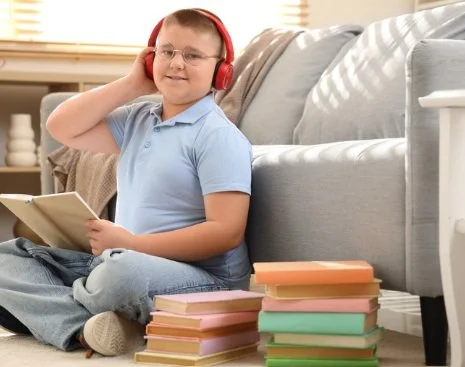
When I taught struggling readers, audiobooks were one of the tools I reached for often. My students who struggled to get through a paragraph on their own could suddenly access the same books their classmates were reading. They were engaged. They were discussing plot and character and theme at grade level. They were having experiences with literature that would have been completely out of reach in print alone. And they were hearing what fluent reading sounds like — the pacing, the expression, the natural rhythm of language that good readers internalize over time.
I believed then, and I believe now, that those experiences mattered. The research agrees. But it also adds something important that I wish I had understood more clearly at the time.
What Audiobooks Do Well
For teenagers, especially struggling readers, the research is consistently positive. Audiobooks build vocabulary, support comprehension, increase motivation to engage with books, and give students access to complex narratives and grade-level content they cannot yet reach independently. The strongest evidence comes from studies where audiobooks are used alongside print. A 2022 review of 32 studies found that pairing audiobooks with printed text produced significantly better comprehension than print alone for struggling readers. For students with dyslexia, the evidence is particularly strong: listening to audiobooks has been shown to improve emotional wellbeing and school engagement, reduce the anxiety associated with reading, and open doors to content that decoding difficulties would otherwise keep shut.
There is also something important about what a child hears. When a skilled narrator reads with expression and pacing, a struggling reader hears what fluency sounds like. That exposure matters.
What Audiobooks Don’t Do
Here is the part that the research is equally clear about. As Willingham wrote in the New York Times, audiobooks “allow listeners to get the meaning while skirting the work of decoding.” That bypass is one of their primary strengths for a struggling reader who needs access to content. But it also means that audiobooks alone will not build the phonics and word recognition skills that students ultimately need.
As Willingham writes, “although decoding is serious work for beginning readers, it’s automatic by high school, and no more effortful or error prone than listening.” A student who is still developing those foundational skills is using very different mental processes when listening than when reading.
This means audiobooks work best as a complement to print reading — not a replacement for it. A teenager who listens to audiobooks and also practices reading in print is getting the best of both. A teenager who listens exclusively, and stops encountering print altogether, may be maintaining comprehension while allowing decoding skills to remain underdeveloped.
The Honest Answer
Are audiobooks real reading? The honest answer is: it depends on what you mean.
A student who listens to a book has genuinely read that book.
If reading means building the decoding skills and print fluency that allow a child to become an increasingly independent reader, then audiobooks alone are not enough. They need to be part of a larger picture that includes print.
For struggling readers especially, the research points toward the most powerful approach: audiobooks to access grade-level content and build motivation, print reading with support to build the foundational skills that make independent reading possible. The answer isn’t not either/or. It’s both.
Subscribe so you don’t miss Sunday’s article.
